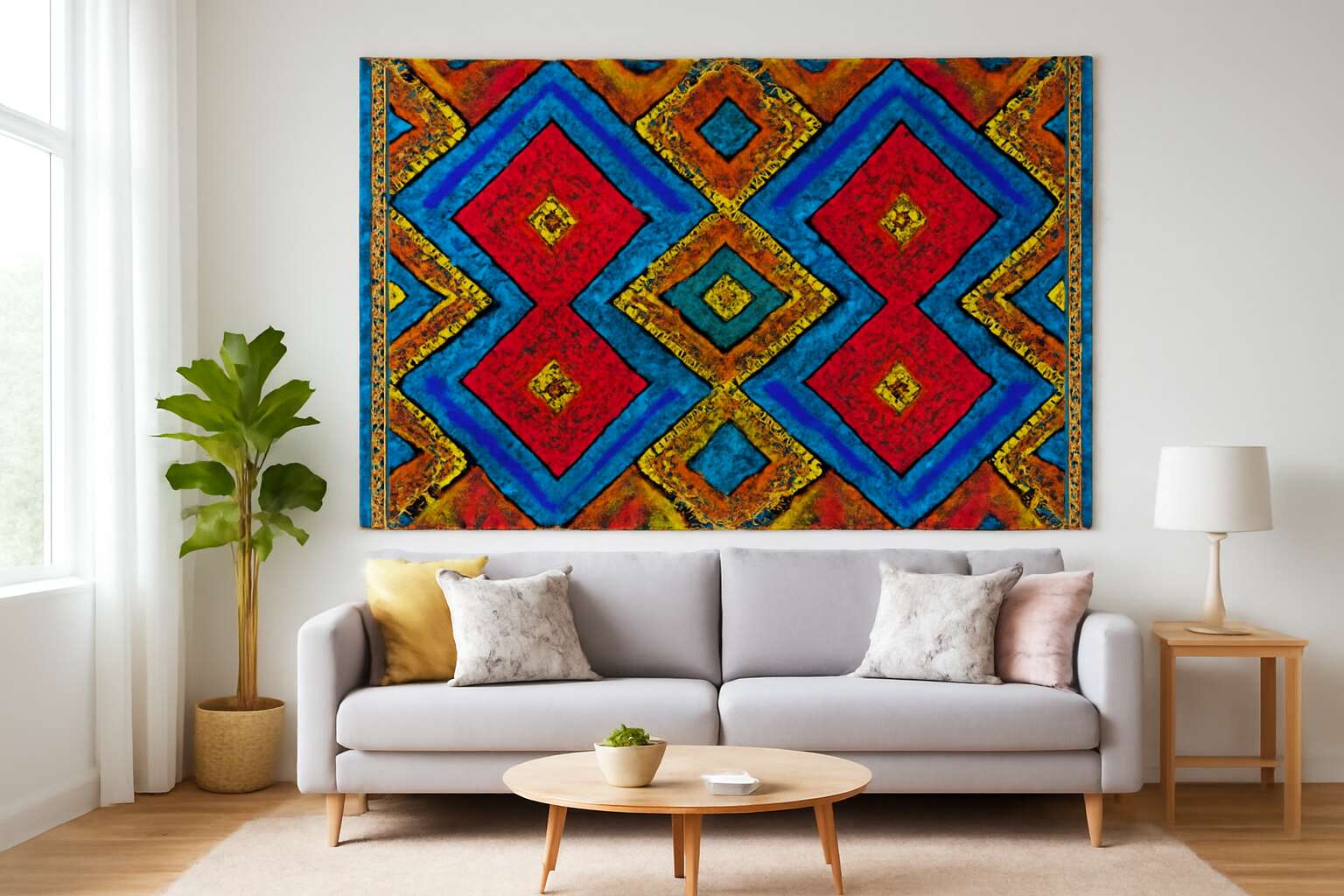
History and cultural significance of African fabrics in interior design
Origins of African textiles and trade routes
Color, pattern, and history mingle in African textiles. From handwoven cotton to bold mud cloth, centuries of skill shape techniques across West, East, and Southern Africa. Indigo blues, sun-warmed reds, and earthen browns narrate journeys—caravans and ships carried cloth along trade routes, shaping the look of african fabric for wall decor.
The origins and the web of exchange reveal motifs and textures—an arc from loom to palace, many hands spinning meaning.
- Origins of weaving and dyeing traditions
- Trans-Saharan and Indian Ocean trade networks
- How these histories shape today’s interior palettes
Today, South African interiors draw these histories into living spaces. A single textile anchors a room, invites conversation, and honours collective memory, turning walls into tapestries of memory with cadence and warmth that linger long after the lamp is lit!
Symbolic motifs and meanings in decor
A Cape Town designer once said, ‘Fabric carries memory—it’s a map you hang on the wall.’ In South African homes, history moves from loom to living room, turning walls into memory and meaning.
Symbolic motifs in African fabrics translate clan stories, rites, and values into decor. When you hang an african fabric for wall decor in a contemporary South African home, you’re inviting histories to speak in color and texture.
Common motifs and what they signify include:
- Adinkra symbols: wisdom and unity
- Ndebele motifs: community, identity, and beauty
- Kuba cloth patterns: reciprocity and social bonds
- Bògòlanfini stories: life, history, and resilience
For South African interiors, these textiles anchor spaces with cadence and warmth. Each wall becomes a chapter, weaving memory into modern living.
Regional variations in patterns and techniques
In South African homes, textiles move from floor to focal point, with 68% of designers noting that wall textiles alter space perception. “Fabric is memory you hang,” observes a designer, and it’s true: african fabric for wall decor becomes a threshold where history greets modern living.
Regional variations in patterns and techniques give each textile its own passport. From indigo-dyed cloth in West Africa to wax prints of East Africa, to raffia-woven panels of Central Africa, and tactile embroidery echoes in Southern Africa—these forms shape interior mood with cadence and warmth.
- West Africa — signature indigo dyeing and mudcloth-inspired textures
- East Africa — wax print patterns and bright color blocking
- Central Africa — raffia weaving and appliqué textures
- Southern Africa — embroidery and bead-inspired surface detail
Influence on modern wall decor trends
Across South Africa’s living rooms, textiles speak louder than paint. A design survey shows 62% of homeowners want materials that carry memory, turning walls into storytelling canvases. african fabric for wall decor isn’t mere ornament; it’s memory you hang.
Historically, these textiles carried community histories and rites, moving from craft tables into households; their textures and patterns are a language that welcomes guests and signals belonging.
Today, their influence on modern trends is a cadence of warmth and brightness.
- layered texture with embroidery and beadwork
- bold indigo, wax-resist and vibrant color-blocking
- natural materials like raffia and sisal for panels
Popular African fabrics and their decor applications
Ankara and wax prints for wall panels and art
“Color is a wall’s best accessory,” says a Johannesburg designer, and Ankara and wax prints prove the point with gusto. These fabrics translate bold storytelling into panels that elevate a room. In South Africa, daylight loves a good textile; a single framed print can turn a bland corridor into a gallery.
Ankara and wax prints are ideal for wall decor thanks to a durable cotton base and fearless motifs—geometrics, florals, and narrative panels that stay vibrant after sunlit hours. They work as standalone panels or blended collages, adding texture and warmth without heavy weight. For lovers of african fabric for wall decor, these prints offer pattern, scale and personality that paint cannot replicate.
- Framed fabric panels in natural wood
- Floating wall art with a thin gallery frame
- Collaged triptychs for a dynamic focal wall
Kente cloth wall accents and framing ideas
In South Africa’s sunlit foyers, Kente cloth has become a signature move; a design survey notes a 37% rise in homes featuring bold wall accents. These geometric chevrons and blazing palettes translate stories into spaces, turning a wall into a narrative canvas—quite the conversational piece. This is a prime example of african fabric for wall decor.
Frame Kente with intention rather than competition. The cloth’s bold geometry shines in framed panels or collaged triptychs, turning a corridor into a gallery. Framing ideas:
- Natural oak frames to echo warm earth tones
- Thin black metal edging for contemporary contrast
- Multi-panel layouts to create a dynamic focal wall
On light surfaces, Kente’s color blocks breathe, creating depth without shouting. The result is a refined celebration of craft that nods to heritage while staying refreshingly contemporary in South Africa’s interiors.
Mud cloth (Bògòlanfini) styling in living spaces
In a 2023 SA interior survey, 37% of urban homes featured bold textile walls, and Mud cloth panels ranked among the most expressive. Bògòlanfini, Mali’s mud-resist textile, is woven by hand and dyed in charcoal and cream—patterns that carry stories across generations. The result is a fabric with a dignified presence and warmth that softens modern lines.
In living spaces, mud cloth interacts with light and air, turning a wall into a quiet theater rather than a loud statement. It pairs beautifully with natural woods, limestone floors, and soft lighting, offering texture and depth to african fabric for wall decor.
Consider a few ideas to let Mud cloth breathe on your walls:
- Layering with warm woods and soft textiles to create contrast
- Balancing large panels with simpler furniture for a calm gallery feel
- Pairing bold motifs with light art and metallic accents to frame the storytelling
Adire and tie-dye fabrics for feature walls
“Color is a language,” a SA designer often says, and Adire and tie-dye fabrics translate it into walls that speak softly yet with authority. Adire, Nigeria’s indigo resist-dyed cloth, merges crescent motifs with ocean blues and earthy browns—patterns born from history and memory. When hung as feature walls, these fabrics bring depth, texture, and a sense of movement that light cannot steal. In african fabric for wall decor, the effect is immediate: warmth, narrative, and a quiet, compelling presence.
- Adire with matte plaster and timber creates contrast
- Tie-dye bursts of color against neutral walls breathe energy
- Simple frames and metal fixtures frame the pattern with restraint
These textiles invite a play of color and light, turning corridors or lounges into storytelling spaces without shouting! They pair well with natural textures and clean lines, letting the fabric breathe and the mood linger.
Dashiki motifs in wall tapestries and prints
Dashiki motifs rise in wall tapestries and prints as a chorus of color and rhythm. They turn a plain feature wall into a story, where geometric medallions and lively borders converse with light and shadow. In african fabric for wall decor, the effect is immediate and immersive.
In South Africa, these prints pair gracefully with timber, linen, and earthy tones, balancing exuberance with restraint. They invite spaces to breathe while maintaining a warm, social energy that lingers after guests leave.
- Geometric medallions and eye motifs
- Bold border patterns that frame the wall
- Vivid palettes that anchor neutrals
- Symbolic flourishes that nod to heritage
Larger formats work as feature panels, while smaller repeats translate to cushions and framed prints that echo the same vitality without overpowering a room.
Color palettes, symbolism, and styling tips
Color psychology and meaning in African textiles
Color is memory you can hang on a wall. In African textiles, each shade is a story—vibrant reds for vitality, rich ochres for wisdom, deep indigos for depth—translated into walls across South Africa’s homes and galleries.
When choosing a color palette for african fabric for wall decor, let color psychology guide you. Warm earth tones create grounding, bold primaries spark conversation, and cool blues invite calm. In textile traditions, colors carry meaning—red for life, gold for abundance, white for clarity.
- Earth tones evoke warmth and rootedness
- Crimson and saffron energize spaces
- Indigo and teal invite contemplation
Styling tips: I love how a bold weave balances pale walls, frames pieces in natural wood, and lets light play across texture. In SA homes, layered textiles from floor to wall create a vibrant, welcoming narrative.
Pairing bold prints with solids for balance
Color is memory you hang on a wall, translating mood into room energy. Earth tones ground a space; bold primaries spark conversation, while cool blues invite calm. This is where african fabric for wall decor becomes a mood map for us.
Symbolism travels through pattern scale and weave. Large motifs claim walls with confident voice, while finer threads whisper tradition. Pairing bold prints with solids creates balance, letting the fabric speak without shouting.
Texture and light perform together, so hang pieces where daylight can skim their ridges. In layered interiors, a single bold panel anchored by calm surroundings feels inevitable!
- Neutral walls let the weave breathe.
- Choose a solid from the same hue family.
- Lighting should caress the texture.
African decor becomes a living conversation—material memory and rhythm that make a SA home feel both historic and contemporary.
Mixing patterns without visual clutter
Color is not decoration; it is a memory you hang on a wall, and in South Africa, a piece of african fabric for wall decor can rewrite a room’s weather. The weave carries light and market chatter, settling into your space like a legend.
Palette choices lean into story: sunlit ochres, clay reds, and cool midnight blues meet daylight. Symbolism travels through motif scale and weave, so choose a panel whose larger patterns anchor a space while subtle textures echo tradition in the margins. The ritual of color becomes mood.
Styling tips—without clutter—emerge when you choreograph scale and texture:
- Bold panels balancing with calm solids in a shared hue range create visual harmony
- Pattern scale varies: a large motif anchors, with smaller accents whispering texture
- Daylight skims the weave, revealing ridge textures
In living rooms across SA, this approach turns decor into a chorus—memory and rhythm living side by side.
Texture layering techniques for wall spaces
Color is weather you hang on a wall, the first spark that rewrites a room’s mood. In South Africa, that weather wears layered notes: dusk, sun, shadow.
Palette stories lean into myth and memory: sunlit ochres, clay reds, and cool midnight blues bloom as daylight shifts. Symbolism travels through motif scale and weave, a panel whose grandeur anchors a space while margins cradle texture. african fabric for wall decor becomes the anchor.
Texture layering is the hidden chorus of design. Here are subtle ways it enlivens walls:
- Anchor large motifs with calm solids in a unified hue family.
- Vary motif scale so that one dominant pattern sits with subtler textures in the margins.
- Allow daylight to skim the weave, revealing ridge textures and depth.
Across SA homes, this approach casts decor as a chorus of memory and rhythm, where fabric walls speak in weather and time.
Sourcing ethically and sustainably
Where to buy authentic African fabrics and wall art
Fabric is memory made tangible, and every bolt carries a blessing. Sourcing ethically and sustainably means tracing every thread to its maker, ensuring fair wages, and choosing dyes with a lighter footprint. Guiding principles:
- Transparent supply chains that trace to a cooperative or studio
- Fair pay and safe working conditions for artisans
- Low-impact dyes and eco-friendly packaging
To find african fabric for wall decor, seek South Africa–based galleries, cooperatives, and reputable online platforms that partner directly with makers. Look for direct-from-maker purchases, customer reviews, and showroom visits in Cape Town, Johannesburg, and KwaZulu-Natal. Certifications or membership in fair-trade collectives can signal commitment to communities and craft.
Choosing such sources helps spaces bloom with stories rather than shortcuts, turning a wall into a quiet festival of color, texture, and memory.
Evaluating quality, authenticity, and provenance
Ethical sourcing is a quiet, deliberate art. In the loom-lit studios of South Africa, I watch threads align with a conscience as much as a design. Every piece of african fabric for wall decor carries a memory, a maker, and a promise that quality should not come at the expense of people or planet.
- Transparent supply chains that trace to a cooperative or studio
- Fair pay and safe working conditions for artisans
- Low-impact dyes and eco-friendly packaging
Quality shows in weight, finish, and dye depth; authenticity lives in the handwork and the lineage, while provenance is the story you can trace to a studio or cooperative.
Supporting artisans through fair trade and cooperatives
Ethical sourcing is a quiet rebellion against fast fashion. In South Africa’s loom-lit studios, I watch hands translate design into cloth, while respect threads through every decision. A seasoned weaver once told me, “Fair trade isn’t charity; it’s dignity woven into each panel.” Partners are chosen for transparent roots, fair remuneration, and a pledge to protect maker communities and the land that nourishes the loom.
- Traceable supply chains linking each piece to a cooperative or studio
- Fair wages and safe conditions for artisans
- Low-impact dyes and eco-friendly packaging
I trust the journey from loom to wall because the narratives stay with the fabric—the weight, finish, and dye depth tell the story of careful hands. For customers seeking african fabric for wall decor, transparency is a design decision as much as pattern, ensuring beauty that respects people and planet.
Care, maintenance, and long-term preservation of fabric walls
In South Africa’s loom-lit studios, every thread carries a pact of transparency. Sourcing ethically means partnerships with transparent roots, fair remuneration, and land stewardship. “Care is a language the fabric understands,” observes a seasoned weaver, and this african fabric for wall decor wears its history with quiet dignity.
Care and preservation unfold as part of the textile’s character, not an afterthought. The story endures where color depth and texture remain balanced, inviting subtle evolution over decades.
Long-term conservation favors respectful framing and climate-aware display, allowing the piece to converse with light and space rather than fight time. The result is a living archive—a story that travels from loom to wall without losing its soul.

0 Comments