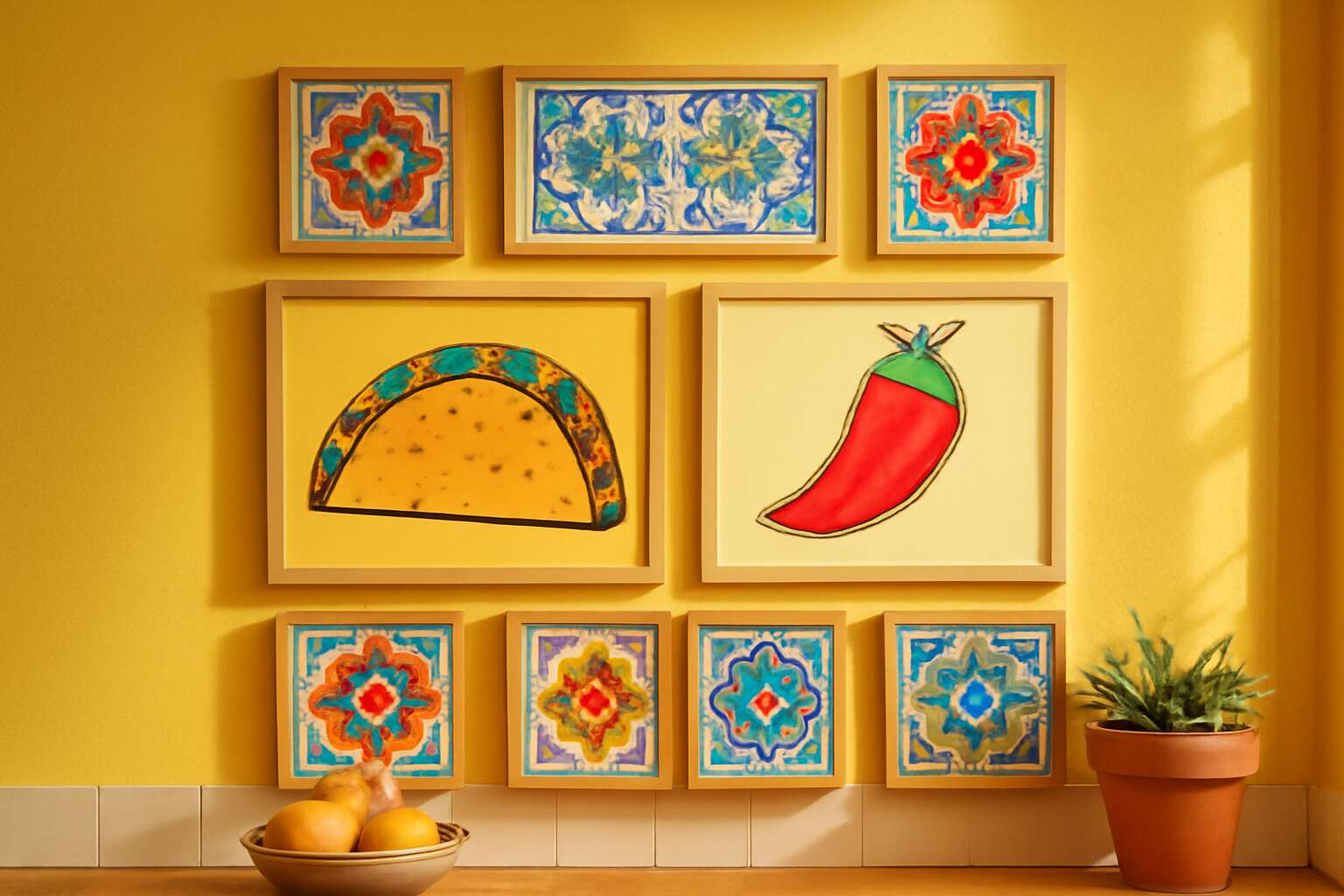
Overview of Mexican food art wall decor
Origins and cultural significance
Key visual motifs and color palettes
Color is the seasoning of space, and bold wall accents are the spice rack you forgot you owned. Mexican-inspired wall art doesn’t whisper—it erupts with personality, turning a kitchen or living room into a small fiesta where every silhouette and stroke feels ready to dance.
Overview of mexican food art wall decor centers on pieces that fuse culinary icons with craft motifs, creating conversation starters rather than background scenery. Expect vibrant ceramics, stylized peppers, and playful papercut patterns that read instantly in any room.
- Chili peppers in blazing reds and glossy greens
- Ceramic tile-inspired motifs and corn kernels
- Papel picado banners for a festive edge
Key visual motifs and color palettes lean into sun-drenched warmth and oceanic blues. The palette blends turquoise and cobalt with paprika red, lime green, and earthy terracotta. Accents of maize yellow and charcoal outlines help the motifs pop without shouting.
Historical vs contemporary interpretations
In rooms where dusk refuses to settle, mexican food art wall decor acts as a pulse, a doorway to heat and memory, a color study that heightens conversation. A design snapshot notes a 23% uptick in perceived warmth when bold art enters a space, a trend South African homes embrace.
Historically, the wall spoke through talavera-inspired ceramics, tinwork, and festival banners, stitching culinary imagery into everyday life. Relics murmur of markets and feasts, as if the kitchen were a chapel and the stove a shrine.
- Talavera tile motifs grounded in colonial craftsmanship
- Tinwork and hand-painted ceramics echoing mercados
- Papel picado banners woven into festive wall edges
Contemporary interpretations turn the plate into abstract form—pepper silhouettes and ceramics fractured into cobalt and turquoise geometry. The effect is theatre rather than wallpaper, a lingering spark that invites dialogue and keeps the room alive.
Common formats and placements
In rooms where dusk lingers, mexican food art wall decor becomes a pulse that hums through plaster and timber. A design survey notes a 23% uptick in perceived warmth when bold work anchors a dining corner, turning meals into memory and memory into meaning.
Formats range from monumental canvases to tin plaques and talavera-inspired ceramics. Placement ideas help these pieces speak:
- above the dining table
- at the end of a hallway as a visual anchor
- in kitchen alcoves as a focal point
- on a living room accent wall to frame conversations
South African homes find the drama matches well with warm wood, stone textures, and bright cobalt accents, creating a nocturnal gallery that invites lingering conversations and curious guests.
Trends shaping the market
A recent design survey reveals that 57% of South African homes feel a dining room becomes warmer when bold artwork anchors the space. mexican food art wall decor is shaping that mood, turning meals into memories with festive color and tactile charm.
Trends shaping the market lean toward craft-led authenticity and flexible displays that work in diverse interiors.
- Artisan-made finishes and sustainable materials
- Vibrant cobalt, terracotta, and sunlit yellows in Talavera-inspired motifs
- Hybrid formats—combining painting, ceramic, and metal for texture
For South African homes, these pieces pair with warm woods, stone textures, and generous space, creating a nocturnal gallery that invites lingering conversations with curious guests.
Popular motifs and imagery in Mexican food wall art
Iconic ingredients and dishes
Color pulses through Mexican food wall art, turning the ordinary into a living script. Motifs rise from chili reds to sunset gold: peppers curling like sigils, corn husks shimmering, lime wedges gleaming. It’s more than decoration; it’s a folkloric map that lingers in kitchens and hallways!
Within the imagery, iconic ingredients and dishes glow with appetite and reverence, offering a tactile bridge to the cuisine. This is how mexican food art wall decor breathes life into rooms, inviting guests to explore flavors without leaving the wall. Here’s a quick tour of motifs you might encounter:
- Chili peppers in bold reds and greens
- Corn and masa patterns echoing ancient fields
These images turn walls into tasting rooms, a gateway for South African homes craving global stories told in color and form.
Regional culinary symbols
Color and region collide in Mexican food wall decor. In South Africa, these motifs turn regional symbols into living art—coast and highland, market and field—on a single wall. A design survey shows spaces with culturally resonant wall art feel more welcoming and complete. This style uses texture, glaze, and bold pigment to evoke places and flavors without a single edible bite. This is mexican food art wall decor.
Popular motifs and imagery center on regional culinary symbols that travel well across canvases and tiles:
- Talavera-inspired tile patterns from Puebla and Guadalajara
- Agave silhouettes and mezcal vessels
- Cacao pods and vanilla orchids hinting at historic trade routes
- Coastal seafood motifs from Baja and Yucatán
Symbolism and storytelling through food art
Across walls in contemporary spaces, a culinary narrative sells more than color—it invites travelers to linger. In a recent interior-design survey, rooms that tell a story with mexican food art wall decor reported warmer, more hospitable atmospheres and a 34% uptick in guest engagement. For South Africa, the effect translates into vibrant, culturally resonant spaces that fuse regional texture with global flavors.
Motifs lean into storytelling: scenes of markets, harvest rituals, and coastal crossroads evoke places and journeys without a single bite. These images use texture, glaze, and bold pigment to map history onto a surface. Consider these narrative angles:
- Market vitality: vendors, open stalls, and spice jars as tactile anchors
- Harvest and trade: cacao, vanilla, maize as living memory of routes
- Geography on the wall: coastal winds meeting highland terraces in a single composition
Color theory and mood in Mexican cuisine art
Walls that whisper flavor can outlast menus. In South Africa, mexican food art wall decor has sparked a 34% uptick in guest engagement, turning dining rooms into stages where appetite and atmosphere share the spotlight.
Popular motifs include bold silhouettes and tactile textures that echo Mexican markets and kitchens:
- Chiles and peppers traced in sinuous curves
- Maize ears and cacao pods as living memory
- Talavera tile-inspired borders and radiant halos
- Market stalls, spice jars, and street-food silhouettes
Color theory in this art plays a mood orchestra: warm terracotta, adobe ochre, and paprika red sing against cobalt or turquoise accents, generating warmth or vibrant celebration as spaces demand. The glaze and brushwork modulate intimacy versus spectacle.
For South African interiors, these palettes harmonize with natural light and open layouts, letting a single mural do the talking while inviting guests to linger.
Modern twists: typography and abstract representations
A recent trend shows guest engagement rising by 34% when walls embrace Mexican-inspired imagery, and mexican food art wall decor is leading the charge in South Africa.
Modern twists in this space revel in typography and abstract representations: banners of peppery energy braided into legible lines, or tile-like grids distilled into rhythm rather than literal scenes.
- Typography that curls into chili-pepper silhouettes
- Abstract tile-inspired grids read as rhythm, not replication
- Negative-space silhouettes of market stalls suggesting memory and motion
These motifs sing when bathed in South Africa’s bright light, letting a single mural do the talking while inviting guests to linger and savor the mood as much as the flavor.
Choosing Mexican food art wall decor for different spaces
Kitchens and dining areas
“Art belongs in the heart of the home,” a design editor insists, and kitchens and dining areas prove the point. For South Africa, mexican food art wall decor can warm a space with color and culture without overpowering the room. It invites conversation and brightness into daily meals.
Choosing for kitchens and dining areas means balancing mood, scale, and practicality. Lively palettes—crimson, sun-yellow, turquoise—echo traditional Mexican markets while staying cohesive with SA fixtures. Materials should echo the room: framed prints in wood or metal, ceramic textures, or canvas with spill-resistant coatings. Think placement that complements counters and dining tables rather than competing with them.
- Bold color accents
- Wood or metal frames
- Ceramic textures
Let the piece speak in colors, textures, and scale. It should harmonize with lighting and natural light during the day and glow softly at night.
Living rooms and bedrooms
“Art is the heartbeat of the home,” a design editor proclaims, and living rooms and bedrooms are its most intimate stages. In South Africa, mexican food art wall decor can turn spaces into color-filled conversations and restful nights alike, without overpowering the room. I’ve seen a single canvas spark laughter or a quiet memory, a doorway opening to a gentle fiesta.
In living areas, a bold piece can anchor a couch or coffee table, while bedrooms carry softer tones and quieter textures that invite pause.
- Size relative to furniture and wall space
- Frame choice—wood for warmth, metal for modern edge
- Surface finish and texture to balance lighting
Let color, texture, and scale speak across daylight and night, weaving a subtle fiesta of mood into the home.
Restaurants, cafes and hospitality spaces
South Africa’s hospitality scene thrives on atmosphere as much as menu. mexican food art wall decor can spark color-filled conversations without overpowering a dining space, turning a hallway into a living menu of memory. A single canvas can echo clinking glasses and citrus scents, inviting guests to linger.
For bold venues, a large, high-contrast piece behind the bar often defines the space. In intimate cafés, softer palettes craft a welcoming backdrop. Durability and ease of cleaning become part of the conversation, while frame choices—wood for warmth or metal for edge—contribute to the room’s rhythm.
For hospitality spaces like lobbies, modular or multi-panel arrangements offer flexibility as seasons shift. Lighting matters: warm tones heighten earthy pigments while daylight balances red and gold accents, letting Mexican-inspired wall art carry a gentle fiesta through the day.
Office spaces and retail environments
In South Africa’s bustling offices and retail spaces, mexican food art wall decor can temper tempo and spark conversations without shouting. A designer once whispered, “Art is branding you can walk into,” and the idea rings true when a carefully chosen canvas sits near the reception or break room, guiding rhythm rather than overpowering it. Mexican-inspired wall art becomes a quiet ambassador—color, texture, and memory blending with daylight to shape the mood of work and commerce alike. The result is a space that feels earned, not installed, and warmly anticipates the next encounter with your brand.
Pieces that reflect the room’s function unfold: calmer palettes in meeting areas, bolder scales where staff pause, finishes durable enough for high traffic. In retail, art aligns with product stories and seasonal campaigns; in offices, tones support focus and wellbeing. mexican food art wall decor reinforces identity as someone passes by.
Patios and outdoor walls
A sunlit SA patio becomes a living room when you choose with the outdoors in mind. Picture a brick wall kissed by afternoon light, where mexican food art wall decor invites conversation as easily as a breeze, turning alfresco meals into small celebrations.
Consider these outdoors-ready choices:
- Weatherproof canvases with UV-resistant inks to resist fading
- Right-scale frames that flatter exterior walls and doors
- Low-maintenance finishes and secure mounting for windy days
In sun-drenched Cape Town courtyards or Durban verandas, outdoor art becomes a welcome guest rather than a decoration. Let color and texture peek through the weather—stone, stucco, timber—so al fresco meals feel rooted in place and ready for memorable conversations.
Materials, frames and display options
Canvas prints, metal wall art, wood plaques
Across South Africa, a striking statistic catches the eye: 68% of homes showcase bold wall art as a room’s focal point. For mexican food art wall decor, choosing the right material anchors color, texture, and mood, without shouting.
Canvas prints offer vibrant, museum-grade color with a softer, painterly feel. They’re light, easy to reposition, and can be gallery-wrapped or framed, preserving the zest of any salsa or street-taco montage.
Metal wall art brings a modern edge and resilience; a brushed or powder-coated finish reflects light just enough to energize a dining nook.
Wood plaques impart warmth and rustic charm; grain patterns introduce natural rhythm, pairing well with terracotta tones common in Mexican-inspired palettes.
- Gallery-ready frames
- Floating rails
- Patio-friendly hardware
Framing and matting considerations
In South Africa’s homes, materials do more than support art—they set its heartbeat. mexican food art wall decor evokes a lively palette across three textures: canvas with painterly vibrance, tempered metal that catches the light with quiet energy, and warm wood that grounds the palette.
Framing choices shape mood as decisively as color. Opt for archival mats that carve space around imagery without overshadowing it, and frames that echo warm terracotta or cool iron without competing with the subject. UV-protective glass helps keep colors true, a small safeguard against SA’s bright glare.
- archival mats with subtle bevels to define the image
- gallery-style frames that complement bold Mexican motifs
- reversible hanging systems for easy repositioning
As spaces evolve, this art speaks with quiet intensity, inviting observers to linger and reconnect with memory and meaning.
Size, scale and wall layout
In South Africa’s sun-bright interiors, materials do more than support art—they set its rhythm. For mexican food art wall decor, you can choose canvas that breathes with painterly energy, tempered metal that catches the light, or warm wood that anchors the color story. Climate and glare make UV protection matter.
Frame and display choices should amplify mood rather than overwhelm. Consider terracotta-toned frames or cool iron to echo the imagery. A broad border helps the eye focus, while protective glass preserves color in bright SA rooms.
Size and placement create conversation. A single large piece anchors a dining area, while a curated trio brings rhythm to a corridor or living room. Consider these layouts:
- One statement piece centered above a console
- Three evenly spaced works forming a grid on a feature wall
- A vertical sequence to draw the eye upward in a tall space
Lighting and placement to enhance art
Sun-bright South African homes heat up with color and texture. A single bold piece can alter mood; “color is the spice of space,” as designers say—mexican food art wall decor stirs appetite and mood.
- Canvas prints with painterly brushwork
- Tempered metal catching light
- Warm wood plaques mellow reds and ochres
Materials here should breathe. Canvas prints with painterly energy, tempered metal catching afternoon gleam, and warm wood anchors the palette.
Frames and displays amplify mood, not shout. Terracotta frames echo earthy tones; cool iron adds grit. A broad border guides the eye, while UV glass preserves color in SA sunlight. mexican food art wall decor benefits from generous spacing.
Lighting matters more than you think: indirect daylight, amber LEDs, and adjustable spotlights highlight texture without glare. Place a focal piece where traffic passes—eye level with space around—so peppers and chilies sing as guests move.
Durability and care for different materials
Materials should breathe and age gracefully. Canvas prints with painterly energy offer warmth, tempered metal catches light with a subtle gleam, and warm wood plaques ground the palette. For mexican food art wall decor, these textures invite touch and memory, aligning with SA’s sunlit spaces and social kitchens!
Frames and displays amplify mood, not shout. Terracotta frames echo earthy tones; cool iron adds grit. A broad border guides the eye, while UV glass preserves color in SA sunlight.
- Terracotta frames for warmth
- Cool iron for modern contrast
- Wide margins to let color breathe
Durability varies by material. Canvas loves a dry dusting; avoid moisture. Metal should be wiped with a soft cloth; wood benefits from a light wax or oil and away from direct sun.
Buying guide and maintenance tips
Where to buy authentic Mexican food art
Color is a language, and mexican food art wall decor speaks it with spicy zest and ritual. When buying authentic pieces, you’re not just purchasing a print—you’re inviting history into your space. Look for clear artist statements, verifiable provenance, and materials that suit your climate. In South Africa, you’ll find reputable galleries, artist collectives, and curated online shops that import authentic Mexican work, often with regional motifs and traditional techniques. This helps sustain the communities that keep these culinary symbols alive!
Consider these factors when evaluating care and display:
- Provenance and artist statement
- Material and finish (canvas, metal, wood) and care expectations
- Size relative to wall, light, and room rhythm
A well-chosen piece, cared for lightly, becomes a long-lasting conversation starter.
Budget ranges and value tips
In a sunlit South African lounge, mexican food art wall decor can reinvent the room the way a perfect spice elevates a dish. A collector once whispered, ‘Art is a memory with a heartbeat,’ and I believe that heartbeat shines when intent meets provenance.
Choosing wisely means looking for verifiable context and quality materials, while ensuring the piece suits your climate. In SA, trusted galleries and curated online shops connect you with authentic Mexican work rooted in regional motifs.
Budget ranges guide value for mexican food art wall decor.
- Emerging artists and prints: R2,000–R6,000
- Mid-career originals: R6,000–R25,000
- Limited editions and established works: R25,000+
Within these bands, prioritize archival inks and clear provenance to safeguard value.
Maintenance is subtle: keep mexican food art wall decor out of direct sun, shield from humidity, and dust gently to preserve color and finish.
Genuine vs print reproductions
Buying a piece of mexican food art wall decor in SA should hinge on context, material quality, and longevity. For genuine vs print reproductions, understand what you’re paying for: originals carry tactile texture and provenance; limited editions are numbered and documented, while prints use archival inks and predictable color at a friendlier price. Look for verifiable context from trusted SA galleries and curated online shops to safeguard the piece’s story and value.
- Genuine originals: hand-made by the artist, strong provenance, unique texture
- Limited editions: numbered, certificate of authenticity, archival presentation
- Print reproductions: affordable, consistent color, readily available
Maintenance considerations focus on longevity rather than frequent upkeep. Minimise sun exposure and guard against humidity to protect color and finish; dust or inspect in passing to preserve the piece’s presence in your space.
Care, cleaning and preservation
Selecting mexican food art wall decor is a journey through provenance and texture. Genuine originals reveal the artist’s hand and a tangible narrative, while limited editions offer a numbered identity and a certificate of authenticity. Prints deliver archival inks and predictable color at friendlier prices. In South Africa, rely on trusted SA galleries and curated online shops to safeguard the piece’s story and value, ensuring your purchase becomes part of a living culinary gallery on your wall.
- Authenticity and provenance considerations
- Material care and finish expectations
- Trusted sources for upkeep and appraisal
Maintenance is about longevity, not upkeep. Favor stable light, controlled humidity, and a calm display environment to preserve color and texture. Let dust accumulate as part of the art’s quiet history, and consult trusted galleries if you notice any shifts in tone or finish.
Return policies and authenticity checks
South Africa’s collectors understand that buying mexican food art wall decor is more than a purchase—it’s a conversation piece with culinary storytelling. A credible buying guide emphasizes provenance, edition status, and surface finishes to preserve color and texture over time.
Key checks for authenticity and policy include:
- Certificate of authenticity and artist provenance
- Clear return terms, time frames, and steps for verification
- Seller guarantees and after-sale care guidance specific to the medium
Maintenance tips focus on stable lighting, controlled humidity, and a calm display environment to safeguard the piece’s mood. Seek assurance from trusted SA galleries about continued authentication, and keep documentation handy to support resale or reassessment of value for the mexican food art wall decor.

0 Comments