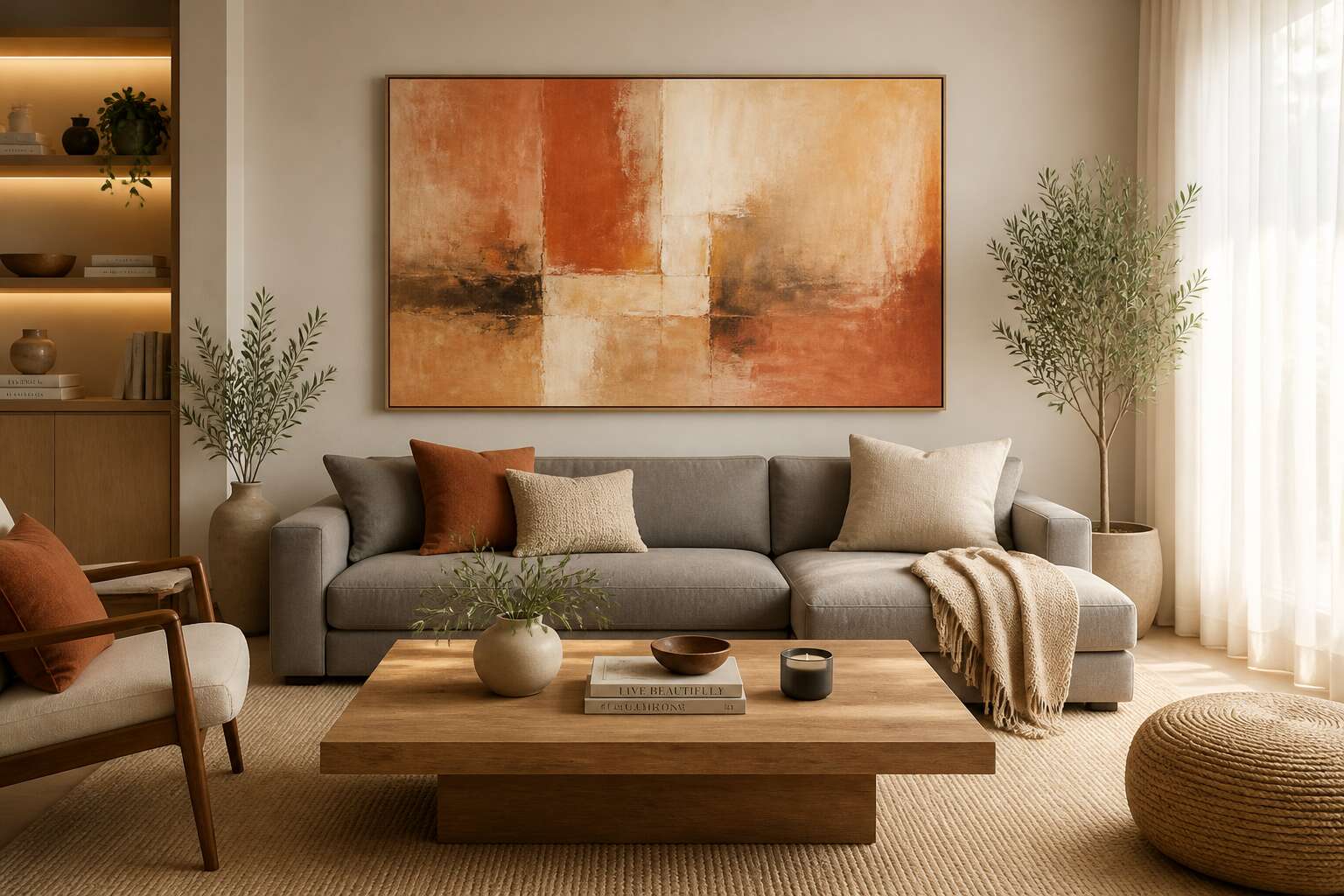
Choosing the Right Art Style for Your Space
Complementing Your Existing Decor
Nearly 70% of interior designers say the right painting transforms a living room faster than any furniture change. When choosing wall decor paintings for living room, consider the architectural character of your space. A Victorian-style home in Johannesburg demands different artistry than a minimalist apartment in Cape Town.
Complementing existing decor requires a deliberate eye. Seek harmony through undertones and texture rather than matching colours exactly. Here are three reliable approaches:
- Extract a secondary colour from your rug or curtains and find art that echoes it.
- Use black-and-white photographs to bridge bold patterns.
- Choose abstract works with the same visual weight as your largest furniture piece.
Popular Art Genres for Living Areas
Landscape paintings outsell every genre in South African living rooms. No surprise there. Our light, our veld, our coastline. They demand representation on a wall.
Genre choices run deeper than scenery. Consider the geometric discipline of Ndebele art, the storytelling weight of township scenes, or the quiet restraint of abstract charcoal work. Each genre carries a different emotional effect.
Popular living area genres for wall decor paintings include:
- Impasto landscapes with visible brushwork
- Figurative portraits with muted palettes
- Mixed media collages with found objects
Wall decor paintings for living room work best when the genre mirrors your rhythm. A dramatic expressionist canvas in Fourways makes a different statement than a serene Karoo study in a Winelands cottage. A home hosting loud Sunday braais needs energetic art. A quiet reading room calls for subdued compositions. If you have stood before a canvas, felt something click, you know that sensation!
Matching Art to Your Room’s Vibe
The right wall decor paintings for living room define how a space feels. A Joburg loft with concrete floors needs bold strokes. A seaside cottage in Plettenberg Bay suits quieter, muted washes. The art should match your daily rhythm, not just the walls.
Before committing to a canvas, I ask clients to weigh three things:
- Do you want the room to feel charged or restful?
- Will you view the piece from across the room or up close?
- Does the scale hold its own against your furniture?
Wall decor paintings for living room have emotional presence. A canvas selected for its energy will never feel out of place. Trust your instinct. If a piece stops you mid-step, it belongs.
Sizing and Placement Strategies
How to Measure Your Wall Space
Your eyes know bad proportion in a second. Your living room wall knows it too. Most people hang art by guesswork, and it shows. A safer starting point: let wall decor paintings for living room cover about 60 percent of the wall’s empty width. That ratio works reliably. Smaller pieces get lost.
I always take three measurements before recommending a size for wall decor paintings for living room. The wall width. The sofa height. The distance from your usual seating position to the wall. That last one matters more than most assume. It sets your sightline.
– Wall width: measure from skirting board to skirting board.
– Sofa height: top of the backrest to the floor.
– Viewing distance: your seated eye level to the wall.
Once you have those numbers, mark the proposed frame edges with painter’s tape. Stand where you usually sit. Check the balance. A 16-inch gap between the sofa back and the canvas bottom reads cleanly every time.
Ideal Height for Wall Art
The seated eye level rules every living room. For wall decor paintings for living room, that point matters more than any tape measure. When you sink into the sofa, your gaze falls about 145 centimetres from the floor. The painting’s centre should sit exactly there! Hang it higher, and you force a constant tilt. Hang it lower, and the furniture swallows the artwork.
Ceiling height shifts the balance. A soaring double-volume ceiling allows the art to rise slightly, yet the seated eye level remains the anchor. I trust the seat. The sofa sets the sightline, and the sightline decides the success.
Creating a Gallery Wall Arrangement
Start with the sofa as your measuring stick. In a typical Johannesburg lounge, a painting cluster that spans more than two thirds of the couch width will overwhelm the seating area. The wall decor paintings for living room must hold their own against the room’s volume.
Place the largest frame first, slightly off centre. Then arrange smaller pieces around it. I keep gaps of about seven centimetres, since the eye reads these as breathing room.
- Test the layout on the floor before hammering nails.
- Mix one bold colour with neutral frames for contrast.
A gallery wall works best when its outer boundary forms a simple shape. That shape should sit within the sightline you established earlier. Avoid letting the arrangement climb toward the ceiling!
Considering Furniture Proportions
Furniture is the true scale in any lounge. A 60 cm print floating above a 220 cm sofa looks hesitant, almost apologetic. A canvas that nearly spans the entire backrest overwhelms the seating zone. The wall decor paintings for living room must negotiate with the furniture beneath them, neither dominating nor disappearing.
I use the sofa as my constant. The width of a painting should fall between 60 and 75 percent of the sofa’s width. Vertical placement also matters. Allow at least 20 cm of clear wall between the furniture top and the frame’s lower edge. That gap prevents the painting from appearing fused to the wood.
Scale extends beyond the canvas. Pair oversized works with heavy, blocky sofas. Match smaller prints with slim, delicate lines. Consider the balance:
- Oversized art on a deep, sectional sofa grounds the entire wall.
- Two or three mid-sized pieces soften a minimal, slim-legged couch.
When the art and furniture share the same visual weight, the room feels fully resolved.
Color and Material Considerations
Using Art to Pull a Color Palette Together
There is a peculiar social anxiety in walking into a room where the art and the sofa appear to be feuding. The painter may speak of ochre, while your velvet cushions whisper a peach truth. Honestly, that mismatch can ruin the atmosphere. When choosing wall decor paintings for living room walls, examine the undertones of the pigments as carefully as the fabric swatches. A cool blue canvas pulls a warm beige rug into a chilly argument.
Frames carry equal weight. A heavy oak frame declares itself; a slim metal one stays quiet. The material of the frame should respect the room’s lighting and surfaces.
- Select brass frames for warm lighting.
- Choose matte black frames for shadowed corners.
- Let raw wood echo neutral linen or leather.
Attend to these material truths, and your painting will settle the entire palette with a quiet nod.
Framed vs. Canvas Options
According to interior designer Thandiwe Mbeki, most living rooms suffer from ‘frame fatigue’ because owners default to one option. A canvas leans casually against the wall, while a framed piece announces its boundaries with authority.
For South African homes, where sunlight is fierce, canvas preserves the pigment’s warmth while glass protects against dust. The material of the frame alters the perceived weight of the artwork. Thin metal floats, while a chunky moulding anchors. When selecting wall decor paintings for living room, consider the texture of your wall surface. Bricks need the clarity of a frame. Plaster welcomes canvas. Decide if you want the piece to disappear into the room or stand apart.
The Impact of Texture and Medium
Texture is the quiet language of a room’s visual grammar. When selecting wall decor paintings for living room, the medium determines how light behaves on the surface. Canvas shows every twist of the weave, while panel smooths the narrative into stillness. A palette knife leaves ridges that cast shadows, making the artwork shift as you move.
Materials also carry regional memory. Local woods like imbuia or yellowwood introduce warmth without competing with the imagery. Natural pigments, such as ochre or iron oxide, respond to South African sunlight with muted dignity.
One simple test: run your hand near the canvas. Does the texture invite proximity or demand distance? Colour starts the conversation, but texture sustains it.
Glass and Lighting Reflections
Sunlight in Johannesburg is fierce. That golden clarity is beautiful, but it can turn a glassed painting into a mirror. When choosing wall decor paintings for living room, think about reflections before you hang. Museum glass reduces glare without dulling the pigment. If you prefer canvas without glass, test the wall at midday. The angle of light matters more than the lamp.
Consider the paint and paper too. Watercolours need UV protection. Oils handle light better, but they still fade. A simple checklist helps:
- Use UV filtering glass for delicate works.
- Position art away from direct afternoon sun.
- Match lighting colour temperature to the room.
Warm LED spots bring out ochre and terracotta. Cool light flatters blues and greys. Your wall decor paintings for living room should stay clear in every light.
Seasonal Rotating Artwork
Rotating your walls is cheaper than redecorating. In South Africa, the light and mood change dramatically between seasons, so a fixed arrangement feels tired by March. Swap your wall decor paintings for living room to match the weather. Heavy, dark frames anchor a winter evening. Lighter canvases and airy materials suit the Highveld summer.
Consider the material, not just the artwork. Wool and velvet absorb light and warm a space. Metal and glass reflect it, which helps in a dim room. Your wall decor paintings for living room should work with the season, not fight it.
Try a simple cycle:
- Autumn: introduce warm earth tones.
- Winter: use textured, layered pieces.
- Spring: switch to bright, minimal frames.
- Summer: go for light, cool materials.
Store unused paintings flat, away from damp.
Where to Buy and How to Budget
Exploring Online Marketplaces
The online search for a striking piece can feel endless. In South Africa, marketplaces have a distinctive appeal for wall decor paintings for living room. I prefer starting with local platforms, because shipping costs and return policies change unexpectedly.
Set your budget before you open a single tab. That discipline is essential. For a modest sum, you can procure wall decor paintings for living room from emerging artists or vintage prints with patina.
- Superbalist for curated selections and sales.
- ArtLovers Africa for original works from established and new names.
- Facebook Marketplace for the thrill of a bargain that appears without warning.
Remember to factor in framing and delivery. A painting that costs R800 might double once you add a frame and courier. Let the price be honest, and your living room will thank you for it.
Supporting Local Artists
Remarkable wall decor paintings for living room often start with a local artist, not a gallery wall. South African creators appear at university exhibitions, community festivals, and studio open days. Skipping gallery commissions means more money reaches the painter.
Budgeting for original art means planning for hidden costs:
- Unframed canvases need custom framing, often R500 or more.
- Delivery fees vary by province, a detail worth confirming before purchase.
- Some artists accept deposits with balance on completion.
I find a fixed budget tends to clarify negotiations. Knowing your ceiling allows respectful conversation. That approach builds relationships beyond transactions.
Custom Commissioned Pieces
Commissioning a painter differs from buying ready-made pieces. The process starts with a direct conversation, often through a studio visit. A deposit of 40% to 50% is typical, with the remainder due on completion. Many creators offer payment plans for larger canvases.
Budgeting for wall decor paintings for living room hinges on a few variables. Reputation, canvas size, and paint quality influence the final figure. A detailed quote should cover materials, framing, and delivery. Shipping across South Africa can add R300 to R800. Some artists include hanging hardware, others treat it as an extra.
In my experience, follow a clear sequence:
- Shortlist three artists matching your living space.
- Request itemized costs before any deposit.
- Confirm timeline and cancellation policy in writing.
This structure ensures your wall decor paintings for living room remain a considered investment, not a rushed whim.
DIY and Printable Art
Digital files offer the cheapest route to wall decor paintings for living room. A single download from a South African creator often costs under R100. Print it at a local copy shop on fine art paper for R50 to R150. The frame is where the real expense appears. Budget R200 to R600 depending on timber quality.
Physical retailers like @Home and Mr Price Home stock ready to hang prints for under R400. These pieces lack the texture of original works, but they deliver an instant impact. In my experience, DIY buyers should follow a simple rule:
– Use a 5mm foam board backing
– Choose a mat with a white core to avoid yellowing
– Order A2 prints for larger statements
The total budget for a printable set should stay below R800. Anything more, and a framed original from a rising artist becomes the smarter purchase for wall decor paintings for living room.
Cost-Saving Tips for Large Statements
Physical stores like Weylandts and @Home stock oversized canvases, but margins run high. Affordable wall decor paintings for living room often come from independent sellers. Visit the Rosebank Sunday Market or the Pretoria Boeremark. Artists price large originals below gallery rates at these venues.
- Ask auction houses like Strauss & Co about unsold lots
- Check with framers for unclaimed commissions
- Follow local art collectives on Instagram for studio sales
A single 150cm canvas creates more impact than three small pieces. Gallery-wrapped options skip framing costs entirely. Heavy-duty hooks from Builders Warehouse handle the install. This route keeps spending near R3,000 for a genuine original. That outperforms mass-produced prints for longevity. Budget conscious buyers who choose this path get lasting value.
Investing in Timeless Masterpieces
The secondary market rewards patience. Auction houses and estate sales often feature original artworks with documented provenance, selling below commercial gallery prices. When choosing wall decor paintings for living room, a single early-career work by a recognised artist carries more lasting value than any mass-produced alternative.
Budgeting for a timeless masterpiece requires deliberate planning. Reserve a fixed annual amount for art, and wait for the right piece. This approach avoids impulsive purchases that clutter your space without enhancing it.
- Study auction catalogue estimates
- Request conservation reports
- Compare insurance costs
Each step protects your investment and ensures the artwork remains a focal point for decades. Provenance documents and condition reports also strengthen resale potential if you ever choose to sell.
Maintenance and Styling Tricks
Cleaning and Caring for Paintings
According to a recent survey of Johannesburg households, the average living room collects enough dust to fill a small teacup every month. Much of that airborne debris eventually settles on your wall decor paintings for living room, making regular cleaning a necessity. Yet care must be surgical. A soft brush or microfiber cloth, moved in a single direction, lifts dust without pressing it into the canvas weave.
Water is dangerous. Even a drop causes warping or discolouration, a fate worse than a bad frame choice. For glass-covered pieces, clean the glass with an electrostatic cloth first, then a damp one. The frame gets its own wipe using a product suited to its material. Do not spray anything near the artwork.
Common mistakes abound:
- Spraying cleaner directly onto the painting.
- Using paper towels that shed lint.
- Hanging art near an open window.
Each error shortens the lifespan of these wall decor paintings for living room. Steady, predictable care allows them to outlast every interior trend.
Rearranging Art for a Fresh Look
Rearranging art costs nothing yet delivers an immediate shift in how a room feels. Your wall decor paintings for living room can be moved from one wall to another, swapped between frames, or even placed on the floor leaning against a skirting board for a more casual stance. Morning light exposes different textures than the afternoon glow, so a piece that felt muted at noon might become the room’s anchor by dusk.
Try grouping smaller canvases together, then separate them again after a few weeks. The eye appreciates novelty. If a particular painting has grown familiar, move it to a hallway or study for a season.
- Swap pieces between rooms every few months
- Lay a large canvas on a mantel instead of hanging it
- Pair a portrait with a landscape for unexpected contrast
This rotation keeps your wall decor paintings for living room feeling intentional rather than static. The same artwork, repositioned, becomes a new discovery entirely.
Layering Art with Other Wall Decor
Your wall decor paintings for living room should not exist in isolation. Layering a canvas against a woven wall hanging, or propping it on a console behind a sculptural vase, adds depth without a single nail. Consider the interplay of materials: a matte oil painting absorbs light, while a brass wall sculpture throws it back. A slim shelf beneath a large piece can host dried proteas or a ceramic bowl, anchoring the artwork to its setting. Try a staggered composition:
- A mirror angled to reflect the painting’s edge
- A textured throw draped over a nearby ladder
- A smaller framed piece leaning against the larger frame
This layering creates a curated vignette. The eye moves from the painting to the object and back, making the space feel inhabited. Your wall decor paintings for living room, when positioned alongside unexpected objects, stop being mere decoration. They become part of a quiet dialogue between texture, shape, and light.



0 Comments