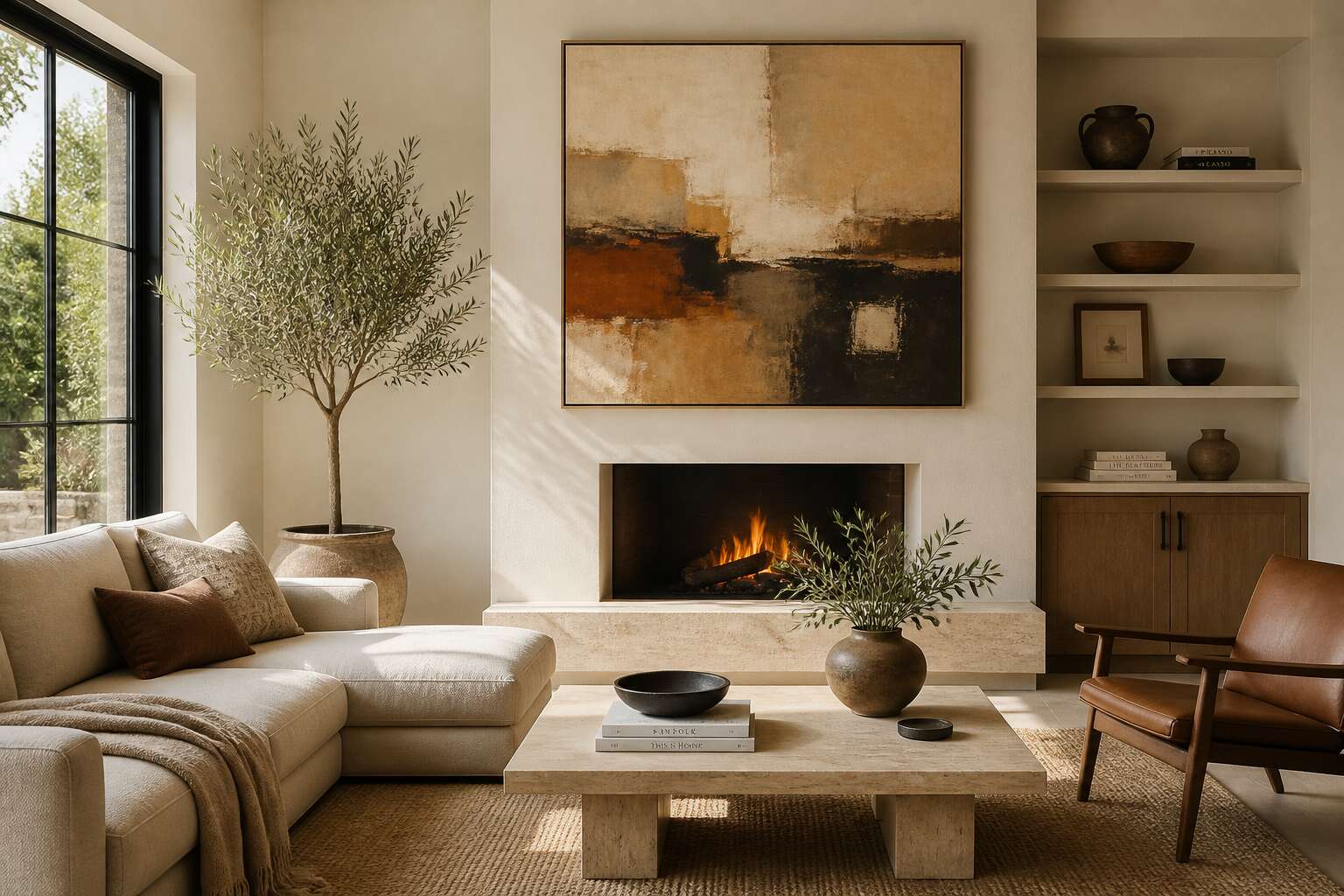
Understanding the Role of Wall Art in Interior Design
The Psychology of Color in Living Spaces
The role of wall art in interior design extends beyond filling empty space. A carefully chosen piece anchors a room’s visual rhythm. In South African homes, where natural light shifts dramatically across seasons, the right artwork changes how a space feels from morning to evening.
Color psychology in living spaces operates on a subconscious level. Warm terracottas and ochres, common in local art, create a sense of groundedness. Cool blues and greens encourage calm and reflection.
When selecting art work for wall decor living room, consider:
- The proportion of the wall against the piece itself
- The existing colour palette of your furnishings
- The emotional atmosphere you want to cultivate
The interplay between pigment and form shapes daily experience. A bold abstract piece can energise a quiet corner, while a muted landscape invites lingering contemplation. The best selections feel inevitable, as though the wall had always awaited that exact piece.
How Art Defines Your Personal Style
The selection of art work for wall decor living room is a form of self-documentation. Every piece you hang is a declaration of taste, whether you intend it or not. Guests read these signals instantly, often without realising it. A gallery wall of monoprints from a Cape Town studio communicates differently than a single large canvas bought on impulse at a roadside stall in Mpumalanga. Neither is wrong. Both are honest.
When selecting art work for wall decor living room, remember that what you hang becomes shorthand for how you think. It reveals your relationship with colour, with scale, with chaos or order. When I look at someone’s collection, I see their preferences laid bare.
If you are starting from scratch, consider these questions before you buy:
- What do you want your space to say about you?
- Which pieces make you stop scrolling?
- What textures and tones do you already gravitate toward?
Creating a Focal Point
Every living room has a visual hierarchy. Without deliberate placement, the eye wanders. A well-chosen art work for wall decor living room provides the structure that orders everything around it. I have watched a modest sofa and plain coffee table transform once a large abstract piece took the wall behind them. The room gained focus.
When choosing art work for wall decor living room, consider scale! A small print on a vast white expanse will vanish, while an oversized canvas can squeeze a compact space. The relationship between the piece and the wall must feel deliberate. Hang the work at eye level, roughly 145 centimetres from the floor.
- Balance the piece with wall dimensions.
- Let the dominant colour echo in cushions.
- Leave negative space around the work.
This focal point does not need to shout. A muted piece can create a quieter effect, holding attention without announcement.
Balancing Proportions and Scale
In Johannesburg, the average living room stretches to around 20 square metres, yet most art work for wall decor living room is selected by instinct alone. I have watched beautiful prints vanish on walls simply too vast for them. Proportion rewards a little arithmetic. A canvas covering sixty percent of the wall’s usable width settles into the space; a smaller piece drifts.
Scale depends on the room’s measurements. Ceiling height, sofa depth, and the distance from wall to seating determine whether a work feels grounded or floating. In a Cape Town flat with low ceilings, a tall narrow panel stretches the eye upward. In a Pretoria lounge with generous proportions, a horizontal diptych suits the wider sightline.
- the wall’s width measured before the purchase
- negative space around the artwork equal to half its height
- the lower edge aligned with nearby furniture lines
When these measurements align, the artwork ceases to be decoration and becomes part of the room’s structure. That is what good scale does for a space.
Selecting the Perfect Artwork for Your Living Room
Choosing Between Paintings, Prints, and Photography
Your choice between an original painting, a limited edition print, or a photograph for art work for wall decor living room is a decision about presence. A painting holds the mark of time. A print is a replica, yet it can anchor a space with clarity. Photography captures a sliver of reality, unfiltered and often haunting.
I have seen clients hesitate at this threshold. What they really ask is whether they want permanence or flexibility. Here is how I break it down:
- Paintings feel alive, with texture and depth
- Prints are approachable and easy to rotate
- Photographs create emotional weight without noise
Trust your instinct, but test the medium against your daily rituals. The right piece will feel inevitable.
Factoring in Room Size and Wall Space
In a Johannesburg apartment with low ceilings, a single oversized piece can do more than a dozen small frames. Wall space is a finite resource. Measure your largest empty wall and work backwards from there. The distance between your sofa and the wall matters as much as the artwork itself.
For open-plan living areas, consider the sightline from the kitchen counter. That is where most conversations happen.
- A narrow wall calls for a vertical piece, not a landscape.
- A wide wall above a sideboard wants a horizontal arrangement.
- A corner wall may need nothing at all.
The true art work for wall decor living room should match the room’s proportions, not fight them. Smaller rooms reward restraint. Overlarge pieces swallow the space.
Matching Art with Furniture and Color Schemes
A room’s furniture establishes its voice, but the art work for wall decor living room answers back. A charcoal grey sofa anchors the space; the piece above it must either continue that gravity or introduce a deliberate counterpoint. The timber tones in a sideboard or the brass legs of a coffee table form a palette the artwork must acknowledge.
Consider these relationships:
- A warm abstract piece softens the severity of dark leather.
- A cool-toned photograph balances the warmth of rosewood.
- A monochrome print unifies clashing furniture textures.
In Johannesburg homes, where natural light shifts quickly, the art work for wall decor living room often needs to connect dark leather and light stone. The selection should feel inevitable, as if the wall always expected it.
Exploring Different Art Styles and Genres
Johannesburg’s gallery scene now rivals Cape Town’s in both volume and variety. Yet many living rooms still settle for whatever print arrives with the furniture order. The genre you choose for art work for wall decor living room sets the room’s entire temperament.
Styles worth exploring include:
- Abstract expressionism for bold colour and energy
- Documentary photography for narrative and context
- Contemporary African portraiture for cultural grounding
- Minimalist line work for restraint
Each genre behaves differently in real conditions. Abstract pieces hold attention from across the room. Still life rewards closer viewing. Figurative work adds a human dimension to passive walls. In Johannesburg’s intense afternoon light, oil paintings shift in mood while matte prints stay constant. The right art work for wall decor living room accounts for those daily changes rather than ignoring them.
Considering the Mood and Atmosphere
A living room absorbs more waking hours than any other room in the house. The art work for wall decor living room you hang there becomes a constant presence, shaping how the space feels before you register it. Mood is not an afterthought. It is the room’s baseline condition.
Consider the hour you enter. Johannesburg’s midday glare flattens subtle tones, while early evening brings warm shadows. A piece that seems stern in daylight can turn intimate after sunset. Most people choose art for how it photographs, not for how it holds a room across twenty hours of lived time.
- Define the feeling you want the room to impose on visitors.
- Observe the artwork under morning, midday, and tungsten lighting.
- Ask whether the piece calms or agitates your state after time.
Your art work for wall decor living room should match the atmosphere you want to inhabit, not the one you think looks impressive.
Placement and Arrangement Strategies for Maximum Impact
The Art of the Gallery Wall
A gallery wall is not a random collection. It is a deliberate arrangement that demands attention. I have seen rooms where the wall becomes the dominant feature. The secret lies in balance and rhythm. Start with a central piece. Build outward with consistent spacing. Vary frame sizes but keep a unifying element. Choose frames in the same wood tone, or stick to black and white prints. Cohesion matters more than variety.
Consider the flow of the room. Your art work for wall decor living room should align with furniture lines. Place the gallery at eye level. Leave sufficient gap between pieces.
Here is a simple order to follow!
- Lay out all pieces on the floor.
- Measure the total width.
- Mark the wall with painter’s tape.
It prevents mistakes. Your art work for wall decor living room becomes a point of interest, not a distraction.
Perfect Height and Viewing Angle
The perfect viewing height for art work for wall decor living room is not a guess. The center of the piece should sit at 145 centimeters from the floor. This aligns with the average eye level of most South Africans standing in a room. Hang too high and the art loses its connection to the space. Hang too low and it competes with the sofa for attention.
When selecting art work for wall decor living room, factor in your seated position. A low lounge chair changes the math. The anchor point should drop by ten centimeters or more. One practical method works well:
- Sit in your usual spot.
- Measure the distance from your eyes to the floor.
- Place the midpoint of the artwork at that height.
The result feels natural. The piece holds the wall without demanding attention. It becomes part of the room’s rhythm.
Arranging Art Around Fixtures and Furniture
Picture this: you have measured the eye level, found the ideal spot, and then a light switch ruins everything. Art work for wall decor living room must negotiate with the architecture, not conquer it. The trick is to treat fixtures as part of the composition. A canvas flanked by two sconces creates a triptych effect, even if the side panels are only light sources. When a sofa enters the scene, align the piece with the visual mass of the furniture. Off-centre placement works if the fixture balances the weight.
- Group smaller frames around a tall plant.
- Leave a gap between art and furniture edges.
- Use a shelf to anchor smaller works.
Art work for wall decor living room should feel deliberate, not like it is hiding from the door frame. The odd nook near the passage is prime real estate. Use it.
Using Lighting to Highlight Artwork
The right lighting makes art work for wall decor living room feel intentional rather than incidental. I have seen a modest print gain depth simply by switching from a ceiling downlight to a wall-mounted picture light! Angle the beam at 30 degrees to avoid reflections on glass or varnish. In South Africa, north-facing rooms receive harsh midday sun, so use sheer curtains or UV-filtering film to protect pigments.
For deeper impact, combine accent lighting with ambient sources. A dimmer gives you control as evening falls, turning the artwork into a quiet presence instead of a glaring focal point. Keep the light source at least 15 centimetres away from the frame to prevent heat damage and shadow patterns. This arrangement works with any size of canvas, from small sketches to large statement pieces.
Layering Art on Shelves and Ledges
The spaces we ignore reveal the most about how we live. In most living rooms, shelves and ledges sit bare while walls carry the entire visual load. Layering art work for wall decor living room onto these flat surfaces shifts that balance. I have seen a single shelf turn an overlooked corner into the most examined part of a room.
Stack pieces of varying heights to create rhythm. Heavier frames sit at the base, lighter ones above. Consider this arrangement:
- Lean small prints behind ceramic vessels or stacked books
- Overlap one piece on another slightly for depth
- Leave negative space between clusters to give each work room
South African homes experience dramatic shifts in natural light through the day. A shadowed nook in the morning becomes a sunlit display by afternoon! Ledge installations make art work for wall decor living room feel tactile and layered, part of daily life.
Seasonal Rotation and Refresh
Most homeowners treat walls as permanent residents. They hang once and forget. Placement demands more. Art work for wall decor living room thrives on change. Observe how late afternoon light hits a corner in Durban. Shift pieces to where shadows fall first.
Seasonal rotation changes how a room feels. Summer calls for bright, sparse arrangements. Winter asks for denser clusters. Use a simple rhythm:
- Move large pieces to south facing walls in summer
- Bring small works forward in autumn
- Swap colors to match the season’s mood
Refresh every few months. The same piece feels new when placed at eye level or near a doorway. That alone changes your relationship to the room.
Budget-Friendly Options and DIY Inspiration
Finding Affordable Original Art
A 2021 Housing and Decorum Report found that 64% of South African renters refuse to display mass-produced prints, preferring walls that show age and memory. Original art work for wall decor living room can be unearthed for less than a takeaway meal. Backyard sales, church rummage tables, and university art auctions hide pieces awaiting renewal. I once spent R40 on a faded landscape that became the centrepiece of my lounge.
Scarcity drives DIY inspiration. Take a cracked portrait, sand it down, and layer cheap acrylic paint in muted ochres. Salvaged pallet wood propped against a wall forms a frame without nails. Torn book pages, pressed into a shadow box, retain their ragged edges.
- Visit scrapyards for copper sheeting.
- Ask local carpenters for offcut veneers.
- Join a printmaking cooperative for shared presses.
The cost of making is time, not money, and the result carries a peculiar weight.
Creating Your Own Abstract Pieces
You do not need a fine arts degree to produce abstract work. A canvas, two pots of acrylic paint, and a palette knife cost less than a movie ticket. Pour, scrape, and stop before it looks deliberate. That raw surface becomes art work for wall decor living room without a gallery markup.
Abstract composition relies on movement, not skill. I have found that the quickest results come from letting the material do the work. Try these methods:
- Dilute paint with turpentine and tilt the canvas to let gravity pull the pigment.
- Drag a dry brush through wet layers to expose the weave beneath.
- Press cling film into fresh paint, then peel it away for a crinkled texture.
Allow drying time between layers. Mistakes become texture! That odd green streak is part of the record. A handmade canvas carries a presence that no retail poster can match. For art work for wall decor living room, that presence matters more than provenance.
Repurposing and Customizing Prints
Striking art work for wall decor living room often costs less than a takeaway coffee. I have pulled prints from charity shops and given them a second life with a pot of gesso and a dry brush. A blank poster becomes a canvas for your own colour story.
Customising prints requires patience. Source a dated botanical chart or old map. Paint over the background, keep the linework visible, and let the paper’s age show through. The blemishes become provenance. What a transformation!
- Paint a matte border directly onto the glass to frame a print without mounting.
- Use a needle to prick dot patterns into a poster, then hang it with a light source behind.
Each piece gains texture and memory. That handmade touch turns ordinary paper into something personal.
Thrift Store and Flea Market Finds
Scratched frames and faded prints crowd the shelves of South African charity shops. Most walk past them. I pull them out! At a flea market in Durban, I once bought a heavy wooden frame with a cracked portrait inside. The painting went in the bin. The frame cleaned up beautifully with sandpaper and wood polish.
Thrift stores reward regular visits. Stock changes daily, and the best pieces vanish quickly. Inspect each frame before buying:
- Check the corners for loose joints.
- Make sure the backing board is still intact.
- Run a finger over the glass for chips or cracks.
Art work for wall decor living room does not require a gallery budget. If you search for art work for wall decor living room, start with the bargain bins. The scratches hold memory. That patina cannot be manufactured. A full statement wall from mismatched frames costs less than a single framed print from a chain store.
Maintenance and Long-Term Care for Wall Art
Cleaning and Dusting Techniques
Dust is relentless. Your art work for wall decor living room gathers it on every ledge, frame, and canvas. Left alone, that thin film dulls colours and settles into crevices.
Clean gently. A dry microfiber cloth is your best tool. Feather dusters push particles around, and sprays can ruin unvarnished surfaces. For textured canvas, use a soft brush on low suction. I dust my own pieces every two weeks, and more often in winter when Highveld air is dry.
- Frame first, then glass or canvas.
- Top to bottom, light pressure.
- Inspect the wire and hooks.
Skip water on raw canvas. Stains are permanent. Dry cloths, regular checks, and steady hands keep your pieces sharp.
Protecting from Sunlight and Moisture
Sunlight damages colour faster than any other element. Your art work for wall decor living room can fade within months if direct rays hit it daily. UV radiation breaks down pigments, especially in prints and watercolours. I have seen this happen to pieces placed opposite large windows. Position pieces away from harsh light rather than living in darkness.
Moisture brings its own problems. Humidity makes canvas sag and paper ripple. In coastal cities, this is a constant battle. Damp exterior walls transfer moisture directly into frames, and stale air worsens the effect.
- Fading occurs fastest in low quality inks.
- Condensation forms on cold frames.
- Stretcher bars warp with persistent humidity.
The back of frames deserves inspection every few months for mould. A small silica gel packet placed near the frame absorbs excess moisture without touching the surface.
Proper Hanging Hardware and Methods
According to a recent survey, nearly 40% of homeowners in Johannesburg hang their art work for wall decor living room at an incorrect height. Proper hardware begins with your wall’s structure. Plasterboard needs wall plugs; masonry needs anchors. Use two hooks for heavier pieces to distribute weight.
I have seen frames fall because owners relied on a single nail. For a large canvas, use a French cleat. It locks securely and allows level adjustments. For prints, D-rings with wire are forgiving and simple to align.
- The anchor strength must be tested before hanging.
- A 2 cm gap from the wall allows airflow.
That gap prevents condensation buildup, which matters in humid coastal areas like Durban. When you choose your art work for wall decor living room, factor in the hanging method before you drill. A little planning saves your wall and your piece.
Restoration and Repair Basics
Time takes a toll on every art work for wall decor living room. A careless elbow can leave a soft dent in stretched canvas. Humidity makes wooden frames swell and crack at the corners. Restoration basics start with knowing which damage you can address at home and which needs a conservator.
Small punctures mend from the reverse side using archival tape. Flaking paint requires a careful touch, matching the original pigment rather than covering it. Loose canvas often tightens with a gentle turn of the corner keys.
- Repair frame joints before they split completely.
- Store leftover paint swatches to aid future touch-ups.
- Photograph the artwork after each repair for a clear history.
Professional restoration preserves the piece and its story. An art work for wall decor living room with sentimental value deserves that level of care. Invasive cleaning disrupts the original patina and lowers value.

0 Comments