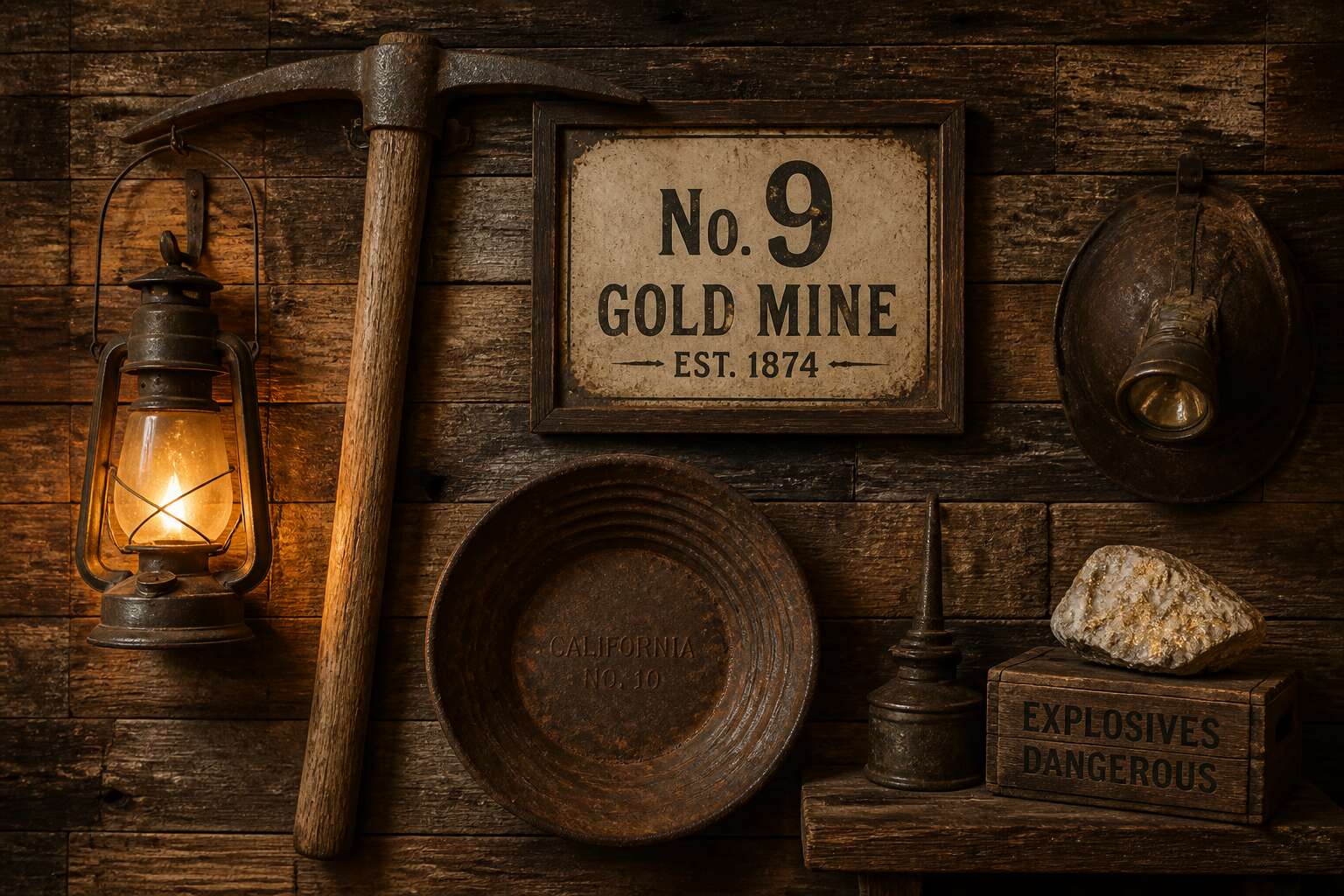
The Allure of Industrial Heritage
Why Rustic Industrial Style Endures in Modern Homes
More than 130 years after the Witwatersrand gold rush, mining heritage still shapes South African interiors. That history explains why rustic industrial style holds such lasting appeal.
Mining wall decor captures the relationship between hard labour and domestic warmth. A coal shovel, a vintage safety lamp, a timber and steel beam mounted as sculpture. These objects carry provenance that mass produced art cannot replicate. I have seen visitors pause at a rusted lamp for exactly this reason.
Consider what draws people to this look:
- The honest wear of original tools, impossible to manufacture
- The direct link to generations who worked underground
- The patina that records real history
Industrial heritage gives a home a story that predates its occupants. For South Africans, that story feels close because the mines built our cities. Mining wall decor keeps that story visible in a modern setting.
The Story Behind Salvaged Mining Artifacts
Every salvaged mining artifact carries a double biography. It records the physical work performed underground, then the decades spent forgotten in a scrap yard before someone recognised its provenance. That second chapter matters to collectors as much as the first.
The story emerges in small details. A dented helmet suggests a rockfall that missed its mark. A worn handle reveals the grip of a miner who worked a full shift. These traces cannot be faked. When you hang mining wall decor, you display evidence of labour, not ornament.
Dealers who specialise in industrial salvage know the difference between a genuine vintage lamp and a reproduction made last year. That distinction shapes the true value of mining wall decor. The allure lives in this honesty.
Incorporating Raw Materials into Contemporary Interiors
In Johannesburg’s inner city, a reclaimed headgear wheel anchors a loft’s lounge wall. That wheel, once spinning above a gold shaft, now carries the patina of a hundred shifts. What strikes me is how these raw materials, the rusted steel, the fractured timber, the coal dust embedded in every crevice, transform contemporary interiors. They do not simply decorate; they connect a room to a specific geography and labour history.
For designers working with mining wall decor, the appeal lies in contrast. Modern sofas against a rugged mine cart panel, concrete floors beside a weathered safety lamp. The materiality needs no explanation.
Consider what works:
- Original brass lamps with verdigris residue
- Segments of conveyor belt rubber as wall hangings
- Surveyor’s steel measuring chains
Such mining wall decor carries a tactile authenticity that reproductions cannot replicate. They invite touch and conversation, turning a living space into a quiet museum of industrial endeavour.
From Underground to Upscale: A Brief History of Mine-Inspired Design
The shift from underground to upscale took decades. In the 1980s, when Gauteng’s gold mines began decommissioning, their equipment flooded the salvage market. Miners took home brass lamps as mementos. Antique dealers followed. Then interior designers noticed the sculptural quality of these industrial objects.
Three phases mark this evolution:
- The salvage era, when workers kept personal items
- The collector phase, when dealers recognised commercial value
- The design period, when mining wall decor became a deliberate aesthetic choice
Context determines meaning. A headgear wheel in a shaft is machinery. A headgear wheel in a Sandton penthouse is mining wall decor. The object remains identical, but its surroundings change everything. I find that transformation remarkable. Industrial heritage offers a tangible link to the labour that built Johannesburg, without requiring a single word of explanation.
Key Elements of a Miner-Inspired Aesthetic
Authentic Tools and Equipment as Wall Mounts
A miner’s pick still carries the wear of its last swing. The wood is smoothed by palms that worked in the dark. This is the core of a miner-inspired aesthetic: authenticity over imitation.
Authentic tools and equipment do the heavy lifting in this design style. A battered helmet, a rusted gauge, a copper spanner. Each piece carries a history that no replica can fake. I have mounted a dozen of these objects, and the weight never fails to surprise me.
- Carbide lamps for their raw, functional lines
- Surveying instruments for their brass details
- Detonator boxes for their sturdy, industrial build
These items anchor a room in the reality of the underground. For mining wall decor, the mounting is part of the story. Use heavy steel brackets and visible bolts. Let the tool hang as it would have been stored, ready for the next shift. This is preservation, not decoration.
Vintage Lamps, Lanterns, and Safety Lights
Vintage Lamps, Lanterns, and Safety Lights
The flame that lit the deepest shafts was a fragile thing. It was a small rebellion against the absolute dark. A miner’s lamp is not merely a source of light; it is a testament to the daily negotiation between man and the abyss. In the context of mining wall decor, these objects command a presence that modern reproductions simply cannot match. They are relics of a time when fire was the only shield against the unknown.
Consider the carbide lamp. Its brass body, often tarnished to a muted gold, speaks of the chemical reaction that produced its hissing, white flame. The residue of calcium carbide inside the lower chamber is a detail many overlook. I prefer pieces that show this wear. The soot and mineral dust are not dirt; they are the patina of a hard-won life. These lights were strapped to helmets or hung on rock faces, casting long, dancing shadows that played tricks on exhausted eyes.
There is a particular gravity to the safety lamp, developed for the detection of fire-damp. Its fine wire mesh and glass cylinder encase a flame that could turn from blue to orange, signaling danger. Hanging one on a wall is to invite a story of vigilance and danger. It is a conversation piece that holds the gaze. For those who value authenticity in mining wall decor, the safety lamp offers a complex silhouette and a history of survival. It stands as a monument to the invisible hazards of the underground.
Here are the types of lighting that work best for a curated display:
- Carbide lamps for their distinct, utilitarian geometry and dual-chamber construction.
- Oil wick lamps, with their simple, soot-blackened nozzles and forged iron hooks.
- Flame safety lamps, prized for their mesh enclosures and robust glass globes.
Each lamp carries a different weight in the hand. The heavier the piece, the more substantial the story it tells. When I mount a lamp, I often use a simple leather strap or a steel bracket, leaving the original handle free. This allows the object to remain a tool, not just a static display. The shadow it casts is often the most compelling part of the composition. The architecture of the wire, the curve of the reflector, these are details that emerge only with careful placement.
I find that the interplay between the metal and the light it once produced is a powerful narrative. These lamps and lanterns are not decorations; they are embers of a dangerous past. Their presence on a wall changes the atmosphere of a room, adding a layer of solemn history that is both beautiful and unsettling. They are the quiet keepers of the darkness they once dispelled.
Metal Signs and Typography from the Mining Era
The lettering on a rusted tin sign carried more than a company name. It held the weight of a town’s livelihood. In the dim light of a recreation hall or a mine office, those painted words were silent promises of wages and work. For mining wall decor, these signs offer a graphic punch that raw tools cannot replicate. Their cracked enamel and faded reds and blacks tell a story of sun and coal dust. A vintage sign that reads “Danger: Blasting Zone” or “No Admittance” carries an authenticity that printed reproductions lack.
The typography itself is a study in function over flourish. Miners needed clear, legible warnings at a glance. This birthed a bold, stenciled letterform that has become iconic in industrial design. Look for signs with raised letters or embossed borders, which catch shadow and depth beautifully on a wall. The patina of age, the chips in the paint, and the slight warping of the metal all contribute to a tactile history that elevates a room beyond mere decoration.
Here are the typographic elements most prized in authentic signage:
- Hand-painted stencils with uneven letter spacing
- Cast iron plaques with raised relief lettering
- Porcelain enamel signs in faded cobalt or ochre
- Painted slogans on corrugated steel sheets
I prefer pieces that show the remnants of a specific mine’s name or a regional geological term. That localised vernacular transforms a generic sign into a relic of a particular place. When you hang such a piece, you are not just adding decoration. You are curating a fragment of a forgotten economic engine. The typography anchors the entire miner-inspired aesthetic, giving visual order to the rough textures of driftwood and iron that surround it. It is the language of the underground, rendered in paint and metal.
Ore Carts, Pulleys, and Other Heavy-Duty Accents
An ore car’s steel wheels carry more than rock; they carry the memory of a thousand underground shifts. When fixed to a wall, the car’s body becomes a shelf or planter, but the wheels and axles offer a more graphic sculpture. I have seen a single forged pulley from a hoist become the centrepiece of a Johannesburg loft, its rusted grooves still showing the bite of steel cable.
The heavy-duty accents that resonate most are those with clear mechanical purpose:
- Cast-iron sheaves from mine headgear
- Mucker bucket teeth or drill steel sections
- Counterweight blocks with embossed foundry marks
These objects carry a brutal honesty. For mining wall decor, a pulley’s worn bearing or an ore car’s riveted flange offers texture that cannot be printed or faked. They are the bones of an industry, hung with respect.
Choosing Pieces for Different Rooms
Living Room Focal Points: Large-Scale Art and Wall Sculptures
According to interior designers, the average living room wall can handle artwork up to two thirds the width of the sofa. For mining wall decor, that means choosing one dominant sculpture rather than a cluster of small relics. A full sized ore cart wheel, mounted on a steel frame, anchors the space and draws the eye upward. Salvaged timber headframe sections, hung horizontally, add architectural weight. I find that this scale changes everything!
When selecting large scale pieces for mining wall decor, consider sightlines and balance. An oversized pulley works best on a blank wall opposite a window, where natural light catches its iron edges. For high ceilings, a vertical arrangement of drill steel creates rhythm. One dominant piece with subdued accents reads as intentional. Let the object breathe; its patina already tells the story.
Home Office Accents: Motivational and Historical Displays
Working from home demands a backdrop that fuels focus without shouting for attention. A single framed assay report or a vintage mine survey map offers quiet motivation, a reminder that precision built entire industries. For mining wall decor in a home office, choose objects with provenance over mere ornament.
I have found that a small collection of brass identification tags, arranged in a grid, creates a subtle rhythm. Each tag carries a miner’s number, a story of daily grit. Pair them with a leather-bound ledger or a wooden core sample box.
- Mount a wooden surveyor’s level on a leather strap.
- Frame a handwritten shift log from a defunct gold mine.
- Display a single carbide lamp on a dedicated shelf.
These pieces speak to perseverance. They ground your workday in history, making every deadline feel less daunting.
Bedroom Ambiance: Subtle Textures and Soft Industrial Touches
The bedroom asks for quieter artifacts. A single copper blasting cap tray, hung beside the window, catches morning light without demanding attention. I have seen how a faded canvas ore sack, stretched over a simple frame, softens the room’s acoustics. The texture does the work.
- A wooden pulley wheel, sanded smooth, mounted above the headboard
- Three small brass tags on a leather thong, hung near the dressing mirror
- A rolled survey map tied with twine, resting on a shelf
Mining wall decor in the bedroom should whisper, not announce. The patina of old iron and the grain of reclaimed timber bring warmth without clutter. Choose one piece, let it breathe, and the room will hold the story of the earth’s depths without overwhelming your rest.
Entryways and Hallways: Creating a Memorable First Impression
Entryways and hallways carry the burden of first impressions. A visitor’s eye moves quickly, so mining wall decor here should be bold but legible. A carbide lamp mounted beside a coat hook gives purpose to the space. I have placed a wooden core sample box on a low shelf, and guests often pause to read the faded labels. The effect is immediate.
For narrow corridors, vertical pieces work best. They guide movement and create rhythm.
– A hung brass surveyor’s compass
– A single miner’s pick with a leather grip
– A framed powder house ticket from an old Transvaal mine
These objects anchor the walkway without crowding it. The right mining wall decor turns a passage into a gallery. It welcomes, but it also tells a quiet story of the earth. Keep the spacing generous, and the hallway will feel both curated and lived in.
Sourcing and Display Tips
Where to Find Genuine Mining Relics and Reproductions
South Africa’s mining industry generated more than a century of discarded hardware, but authenticity is scarce. Genuine mining wall decor rarely appears in retail catalogues. Instead, look for estate sales in former gold and coal towns, where families sell original equipment after generations of storage. Some scrap metal dealers in the Free State and Gauteng still sort out recognizable pieces, such as brake levers or gauge faces. Reproductions have a different place in this market. They offer consistent sizing and safer edges for homes with children.
For display, the wall’s structure matters more than the item’s beauty. A heavy pulley demands a masonry anchor; lighter items like brass tags need only a picture hook. Mixing one authentic artifact with two reproductions keeps the cost reasonable while preserving the visual story. Consider lighting from below to emphasize the texture of rust and wood grain. That approach makes the decor feel deliberate, not accidental.
DIY Projects for Repurposing Rusty Hardware
Turning rusty hardware into mining wall decor starts with a simple rule: remove the loose flakes, keep the patina. Wire brushing and a coat of clear lacquer stabilise the surface without erasing decades of character. A brake lever becomes a curtain rod bracket. A worn gauge face mounts inside a shadow box, or you can hang it as is.
Here is what I keep in mind for safe handling:
- Wear gloves when moving sharp pieces
- Soak smaller items in vinegar overnight, then rinse and dry
- Check wall load before adding heavy iron
Repurposing does not mean rebuilding. The best mining wall decor still looks like it came straight from the slope. Respect the original form and let the rust tell the story.
Arrangement Strategies for Cohesive Wall Compositions
Every scratch and rust bloom on an old miner’s pick carries a story, but finding that story takes persistence. Look beyond antique malls. Old mine offices, auction lots, and farm sales in the Free State and Northern Cape often yield candlestick holders, blasting boxes, and surveyor tools at a fraction of gallery prices. Ask for provenance; a worn brass tag or chipped enamel stamp tells more than a polished reproduction. Turn a piece over and check for weld marks, those are the fingerprints of the original miner.
Arrangement strategies for cohesive wall compositions rely on a few simple rules:
– Group small relics, like spoil gauges and pocket watches, within a single shadow frame.
– Use the heaviest item, often a pulley wheel, as your anchor and let lighter pieces cluster on the diagonal.
– Align the top edges of frames to keep one sightline.
Repeat one element, such as iron tone or patina colour, across the entire installation to unify the mining wall decor.
Lighting Techniques to Highlight Textured Surfaces
Lighting changes how a rusted surface reads in a mining wall decor arrangement. A flat overhead bulb flattens every pit and weld mark, so the angle matters more than the wattage. Set a track spot or picture light to graze across the metal at 30 degrees. That low angle catches the raised edges of a pulley wheel or the stippled face of an old blasting box, turning subtle wear into visible depth.
Warm LED spots near 2700K render the brown and orange tones of rust honestly. Cool light makes aged iron look flat.
- Bounce light off a matte white wall to soften the shadow side of a heavy piece.
- Place a small spot behind the frame to separate the object from the wall.
In a South African home, afternoon sun through a high window provides that grazing angle for free, but only for an hour. A dimmer on the track system reproduces the effect at night.
Complementing Architectural Features
Pairing Wood, Metal, and Stone for Balance
Stone, timber, and steel each carry distinct qualities. When composing mining wall decor, the interplay between these materials can harmonise with your architecture or disrupt it. A sandstone wall demands quieter companions, while exposed brick invites the rough texture of aged iron.
Consider the proportions of your room. High ceilings support larger assemblies of wood and metal. Narrow passageways call for lighter arrangements that reflect the mineral strata outside Johannesburg. I have found that pairing a reclaimed oak beam with a rusted pulley, then anchoring both against a slate surface, creates the right tension without clutter. This is where mining wall decor earns its place.
Sometimes the arrangement benefits from a deliberate sequence:
1. The dominant material in the room sets the initial tone.
2. Pieces sharing one visual trait with that material create continuity.
3. A secondary material provides counterpoint.
4. The original architecture remains visible.
Balance does not mean symmetry. It means each element earns its position.
Color Palettes Inspired by Earth and Ore
Somewhere between mine dump mustard and the deep charcoal of a haul truck tyre lies a palette that makes mining wall decor feel anchored. The architecture around you already carries its own hues. Steel window frames, exposed ducting, or a rough plastered wall in a Johannesburg loft will dictate which earthy tones you can introduce. Terracotta or ochre accents warm a cold concrete expanse. Slate grey and rusted orange nod to the ore itself.
Here is how the colours tend to pair with common features:
- Dark timber beams want pale mineral tones, not heavy charcoal.
- Exposed brick absorbs warm rust and burnt sienna.
- Polished concrete calls for muted greens and deep browns.
The architecture stays visible. The mining wall decor simply borrows from the earth to complete the room.
Blending Vintage Finds with Modern Furniture
Parktown’s pressed-steel ceilings dwarf anything hung beneath them. A single vintage headlamp reads as a whisper, not a statement. Place a modern leather sofa below it, and the contrast does the work.
Mining wall decor should acknowledge the existing architecture. A Victorian fireplace wants a rusted ore sample, not a mass-produced print. A loft’s concrete column pairs better with a brushed steel pulley than another reclaimed timber shelf. I have watched this pairing fail when the vintage piece gets lost against a wide, empty wall.
Consider how the pieces interact:
- A heavy vintage cart wheel against a sleek, plastered wall
- A clean-lined modern console beneath a gritty, riveted sign
- Polished concrete floors with a weathered brass safety lamp
The architecture frames the collection. The furniture gives it scale. When the blend is right, mining wall decor completes a room without claiming it.
Accent Walls That Imitate Mine Shaft Textures
An accent wall that imitates mine shaft textures does not mimic darkness. It reproduces the geological pressure that shaped the earth. Rough plaster, stratified paint layers, and ochre pigment create a surface that feels excavated rather than decorated. The texture asks for touch, and that physical response changes how the room is perceived.
This approach works best when the accent wall frames an existing feature. A deep recess becomes a drift. A chimney breast becomes a stope. Consider these finishes:
- Scored plaster against a smooth ceiling line
- Iron oxide washes over a textured render
- Shadow gaps that suggest timber bracing
Mining wall decor in this context does not compete with the architecture. It completes the architectural story, turning a flat surface into a geological record.
Seasonal Styling: Switching Out Small Decor Elements
Seasonal styling switches small elements, not the architecture itself. A copper scoop in summer becomes a brass finial in winter, small swaps that honour the room’s fixed lines. The wall stays dominant, but the accents shift with the light.
I often advise clients to swap out three items, no more. For instance, try these!
- Ochre cloths over a beam in autumn
- A galvanised bucket with dried proteas in spring
- Cast iron hooks holding a woollen scarf in winter
These touches complement the original features without competing with them. The recess stays a drift, the chimney breast stays a stope. Seasonal styling keeps mining wall decor alive because it responds to the room’s changing mood, not to trends.
Maintaining and Preserving Antique Finishes
Most industrial artifacts lose more value from over-cleaning than from age. Mining wall decor should never overpower original woodwork or exposed brick. Let artifacts settle into their environment, as if they have occupied that space for decades. Many South African homes, particularly those near the Witwatersrand, carry their own industrial lineage in ceilings and lintels.
Antique finishes hold history in their surfaces. A century of grime, handling and oxidation creates a patina no reproduction can mimic. Resist the urge to restore these pieces to newness. Light dusting with a dry cloth preserves the finish without stripping the evidence of use. This restraint keeps mining wall decor honest.
- Anchor heavy artifacts in corners and recesses where the architecture offers support
- Keep fixings discreet so the object draws the eye, not the hardware
- Limit direct sunlight to slow pigment and metal degradation
Architecture and relics perform best when they complement one another. Respect the building’s fixed lines and the artifact’s aged surface, and the room maintains a narrative that feels deliberate and lived in.




0 Comments